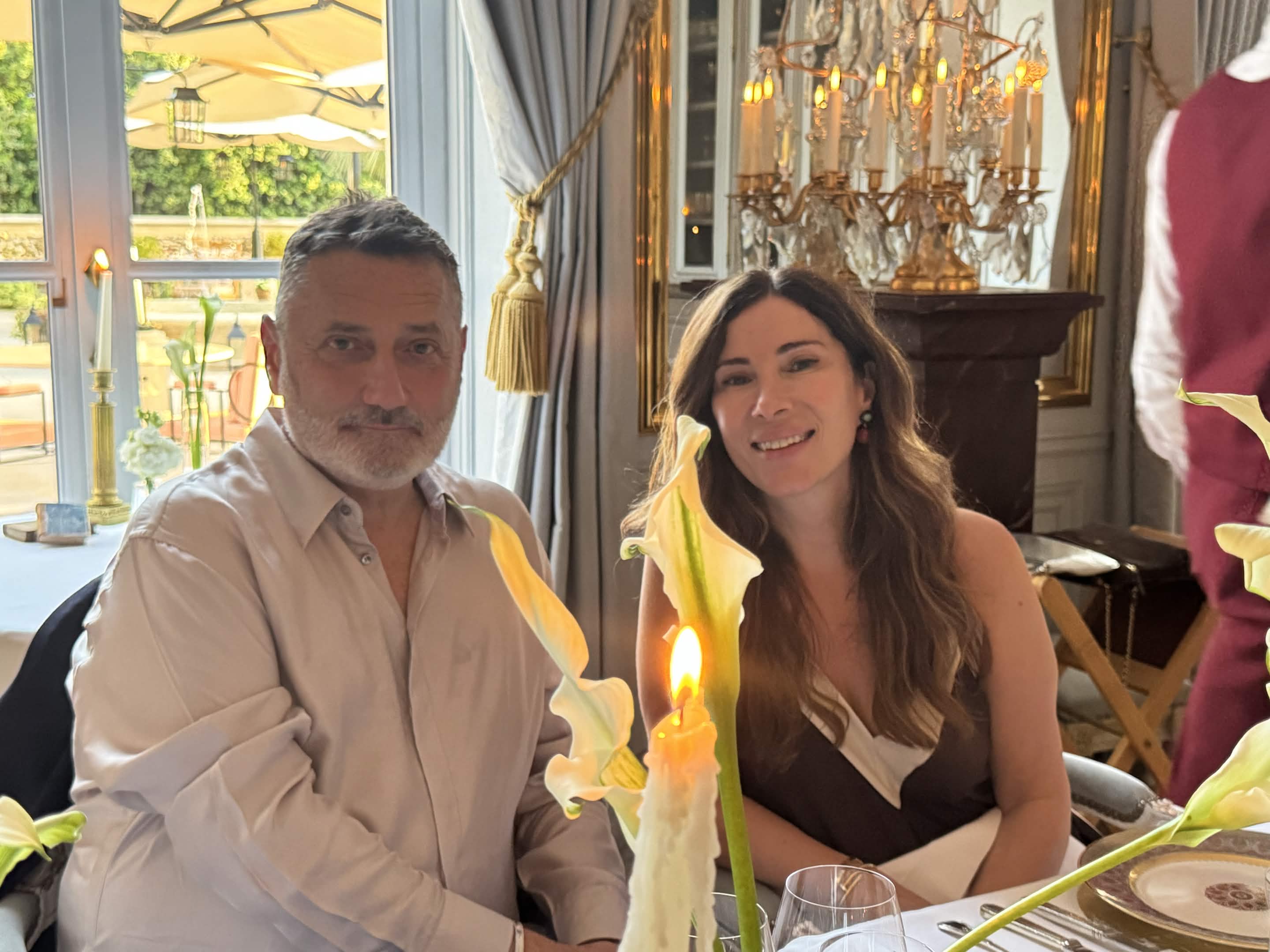
The Years Behind the Work
Beauty has a bad habit of turning birthdays into deadlines. The number arrives; the industry supplies the indictment. Every year becomes another condition to correct, hide, or sell against.
That logic has limited value in a treatment room. Two clients can share a birth year and require entirely different work. One may be dealing with dehydration and facial tension; another with inflammation, pigmentation, hormonal changes, or a routine that has become too aggressive. Age belongs in the consultation, but it cannot conduct the consultation.
The skin itself, of course, offers the most useful information. Its texture, elasticity, congestion, sensitivity, and response to touch tell the practitioner what has been happening and what the tissue can tolerate. Reading those signs takes more than familiarity with brands, ingredients, and machines. It takes watching skin change before, during, and after treatment, across many different people, across many years.
Toska’s birthday gives us reason to celebrate those years - and the judgment they have produced.
The Work Behind the Craft
Experienced practitioners are often described as having an instinct for what they do, as though they simply know what a client needs the second they enter the room. However, this is only brought by continuous practice.
The esthetician remembers how a similar barrier responded to exfoliation. She recognizes the tight, reflective surface of skin that has been stripped rather than properly hydrated. She notices when inflammation is masquerading as brightness, when repeated extractions will produce more injury than relief, or when the client’s most expensive product is also the product causing the problem.
None of this arrives through theory alone, rather it accumulates through treatments, follow-up conversations, before and after photos, seasonal changes, unexpected reactions, and the less glamorous work of revising a plan that did not perform as intended.
Toska trained in London within a European beauty tradition that demanded technical competence alongside manual skill. When she later moved to the United States, she found facial care divided between medical intervention and spa treatments built primarily around relaxation. Toska Spa grew from her refusal to accept that division.
A facial could be sensorial without becoming frivolous. It could produce visible change without treating the skin as something to attack and conquer. Technology, massage, exfoliation, masks, serums, and finishing products could operate within one treatment, provided each step had a reason for being there. A treatment earns its place by improving the skin beyond the hour in which it is performed.

The Discipline of Knowing When to Stop
Skincare expertise is often associated with adding: stronger formulas, more advanced equipment, another corrective step. In practice, some of the most consequential decisions involve removal.
The cleanser may need to go. The exfoliating lotion may need to be used twice a week instead of twice a day. A client preparing for an event may need recovery and hydration rather than an ambitious peel. Skin that appears dull may be inflamed, and stimulation may deepen the problem. A routine assembled from individually excellent products can still fail because the products were never meant to be used together.
Restraint requires confidence. It is easier to impress a client with activity than to explain why the skin needs fewer variables and several weeks of consistency. It's easier to follow a protocol than to alter it after the first touch reveals that the planned treatment is wrong for the face on the bed.
Toska’s approach has always depended on this kind of discernment. Products are tested rather than accepted on reputation alone. Trends are consistently challenged against the needs of actual clients. New technology enters the treatment room when it contributes something useful, rather than for the sake of novelty.
It is a practice that can evolve without abandoning its own standards.

A Standard Other People Can Practice
Toska Spa now extends beyond Toska’s own treatment room. Her name carries through the team, the consultations, the selected product lines, the treatment protocols, and the expectations surrounding client care.
That expansion introduces a harder form of professional work: transferring judgment.
A protocol can be written down. Judgment has to be taught through observation, correction, repetition, and explanation. The esthetician needs to understand why a step is performed, what signs would justify changing it, and when the treatment should depart from the original plan.
The same principle governs product consultations. A recommendation should account for the client’s present routine, tolerance, goals, climate, and willingness to follow the regimen. Six excellent products can become an expensive failure when they are prescribed without regard for the person expected to use them.
Whether the consultation takes place in the spa or online, the standard remains the same: assess before recommending, explain the purpose of each product, and leave room for the routine to change as the skin changes.
That standard is one of the more significant things Toska has built. Businesses can reproduce branding, services, and retail assortments. Years of professional judgment is harder to procure.
Another Year
A birthday can be counted easily, but the work contained within those years is harder to reduce.
It includes all the clients treated through different periods of their lives; formulas tested and discarded; techniques refined through thousands of repetitions; treatments revised after the skin answered differently than expected; and a team taught to look beyond the surface of a protocol.
Toska’s birthday offered an occasion to look beyond the date itself and toward what now carries her name: the spa she founded, the standards she established, and the team entrusted with maintaining them.
To Toska - and to the year ahead.